
English| EUR
Suggested for you
More currencies
Choose a language
Roughly 280 kilometres of open desert separate Aswan from the twin temples of Ramses II, and almost every visitor crosses it on the same two-lane road. This abu simbel from aswan bus guide explains how the journey is structured, why departure times cluster before dawn, and what the timing means once you are standing at the gate.
Quick answer
The road journey covers about 280 kilometres each way and typically takes three to four hours in each direction, which is why coaches leave Aswan in the small hours. The site itself opens 06:00–17:00 every day, and the recommended arrival window is 06:00–08:30 — early enough to beat both the heat and the large convoys.
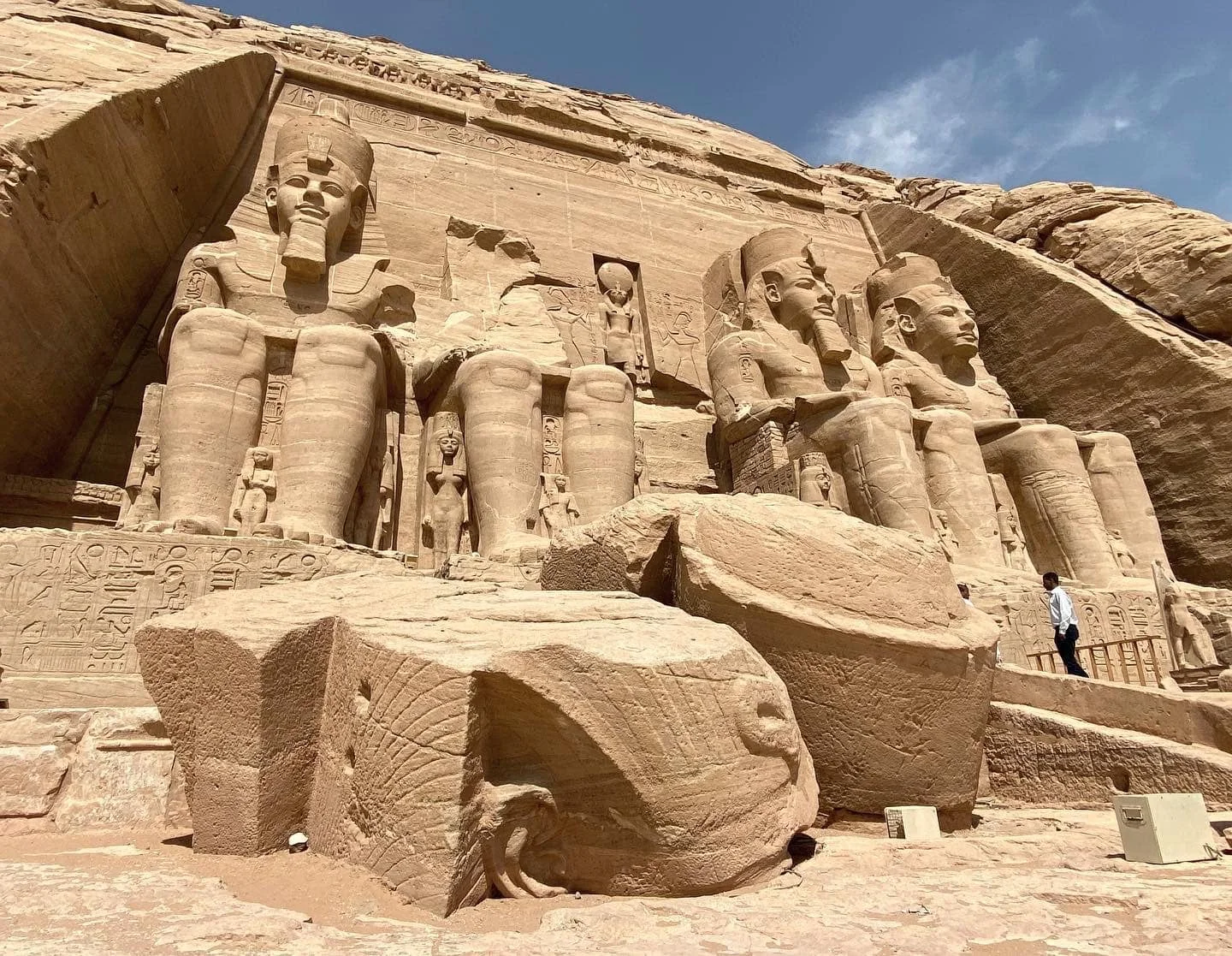
The temples that draw these coaches are not where Ramses II left them. Between 1964 and 1968, a UNESCO-led rescue operation cut the Great Temple and the smaller Temple of Hathor and Nefertari into more than a thousand blocks and reassembled them 65 metres higher, above the rising waters of Lake Nasser. The artificial hill behind the colossi is hollow. The solar alignment that lights the inner sanctuary twice a year survived the move, shifted by a day. Anyone researching the abu simbel from aswan bus is really asking about a single stretch of asphalt. The road runs south-west from Aswan through the Western Desert, past the Toshka spur and a horizon of nothing much, before the lake reappears near the Nubian village. There is no rail line and no scenic detour. Departure clusters are dictated by heat and by the habit of travelling in groups: vehicles historically moved under police convoy, and although the rules have relaxed, the rhythm stuck. A pre-dawn start remains standard practice for an Aswan to Abu Simbel day trip, whether by coach, minibus or private car. That rhythm has consequences worth planning around. Arriving at the front of the wave means walking the curved approach path while the eastern light still rakes across the four seated colossi and the interior halls are quiet; arriving late means sharing the hypostyle hall and the Osirid pillars with several coachloads at once. Most groups allocate roughly two hours on site, which is enough for both temples, the sanctuary and the lakeside terrace, but not for lingering. Visitors travelling independently should confirm return departure times before setting off, since the last vehicles back to Aswan leave well before evening. The wider question is whether the road is the right choice at all. A short flight from Aswan Airport cuts the transit to under an hour each way but costs considerably more and locks the schedule tight. Cruise itineraries on Lake Nasser approach the temples from the water instead. For most independent travellers, the abu simbel from aswan bus remains the practical compromise: long hours, low cost, and a full morning at one of Nubia's defining monuments. The sections below cover departure logistics, hours, fees and the seasonal timing in detail.
“The artificial hill behind the colossi is hollow — the entire mountain was rebuilt around the temple it once contained.”
Abu Simbel is located approximately 280 kilometers south of Aswan. Travelers primarily rely on road transport via the Aswan-Abu Simbel Road to reach the site.
Public bus from Aswan Bus Station to Abu Simbel town
Private hire via Aswan-Abu Simbel Road
Rental vehicle via Aswan-Abu Simbel Road
While some travelers use public buses, most visitors arrange shuttle services or private transport to ensure a direct connection. Aim to depart Aswan early to complete the journey efficiently.
The best arrival window for visitors traveling from Aswan is 06:00–08:30. Arriving during this period allows visitors to beat the heat and avoid the large convoys of tour buses that arrive later in the morning.
Mild temperatures, 10°C–25°C
This season offers the most comfortable walking conditions for exploring the site.
Warm, 20°C–35°C
Early morning visits are essential to avoid rising midday temperatures.
Very hot, 30°C–45°C
Strict adherence to early arrival times is required due to extreme desert heat.
Verdict: For the most comfortable experience, plan your visit during the winter months and target the 06:00–08:30 arrival window.
The Abu Simbel temple complex remains open to visitors every day of the week, including weekends.
The bus run from Aswan is a long desert crossing, so a few preparations made in advance decide how comfortable the visit itself feels.
Everything you need to know about abu simbel from aswan bus
Travelers typically arrange transport through professional operators or private hire to manage the three-hour journey. Using an abu simbel from aswan bus service ensures you remain within the authorized logistics flow for this remote desert destination.
Booking a guided excursion often simplifies the process, as these trips manage the early morning departure and navigation through the Nubian desert. Many visitors prefer these organized Aswan attractions packages to avoid the complexity of scheduling their own transit.
You should plan your arrival between 06:00 and 08:30 to beat the heat and the large convoys of tour buses arriving from Aswan. This optimal period allows you to explore the Great Temple and Temple of Nefertari before the midday sun intensifies.
Security protocols are strictly maintained in the Aswan Governorate, so your transport provider will handle the necessary vehicle registration. Choosing a reliable abu simbel from aswan bus connection helps ensure you adhere to regional travel requirements throughout your journey.
The standard adult entry fee for foreign visitors is 822 EGP. This fee covers access to the main archaeological site maintained by the Ministry of Tourism and Antiquities.
While it is possible to travel independently, using an established abu simbel from aswan bus route is common due to the distance and the nature of the desert road. Most travelers prefer the convenience and security of pre-arranged transport for these UNESCO World Heritage landmarks.